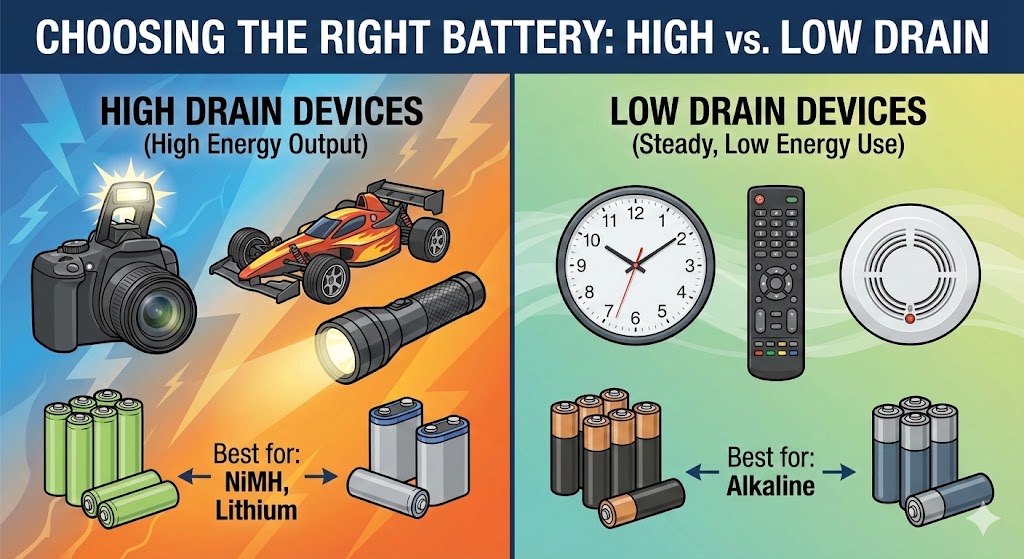
High-Drain vs. Low-Drain Devices: Are You Killing Your Electronics with the Wrong Battery?H2The "Dead Toy" Syndrome: A Familiar Frustration
It’s Christmas morning. You’ve just put a fresh set of batteries into your child’s new remote-controlled race car. The lights flash, the wheels spin, and the excitement is palpable. Ten minutes later, the car slows to a crawl and dies.
Your child is crying, and you are confused. "But I just bought those batteries!" you think.
Here is the hard truth: The batteries weren't necessarily "bad." They were just the wrong tool for the job. In the world of portable power, not all devices are created equal. Mixing up High-Drain and Low-Drain battery applications is the number one reason for poor performance and wasted money. Let’s decode the mystery so you never have to deal with a disappointed toddler (or a dead camera flash) again.
What Exactly is "Device Drain"? (The Water Pipe Analogy)
To understand why your digital camera eats batteries while your TV remote lasts for years, you need to understand "drain."
Think of electricity like water flowing through a pipe.
Voltage (V) is the water pressure.
Current (Amps) is the width of the pipe.
Different devices demand water at different speeds. This demand is what we call "drain."
High-Drain Devices: The Thirsty Sprinters
High-drain devices are the power-hungry beasts of the electronics world. They have motors, bright screens, flash bulbs, or complex processors. They don't just sip energy; they gulp it. They shout at the battery: "Give me maximum power, RIGHT NOW!"
Common examples:
Digital cameras (especially with flash)
RC cars and motorized toys
Video game controllers (Xbox/PlayStation)
Portable fans
If you put a weak battery in these, the "pipe" collapses. The battery might still have energy inside, but it can't push it out fast enough to satisfy the device.
Low-Drain Devices: The Steady Marathon Runners
Low-drain devices are the chill minimalists. They spend most of their time sleeping or doing very simple tasks. They sip energy slowly and steadily over months or even years.
Common examples:
TV Remote controls
Wall clocks
Smoke detectors
Simple calculators
These devices don't need a firehose of energy; they just need a consistent trickle.
The 10-Minute vs. 2-Hour Reality: Carbon Zinc vs. Alkaline
This is where the chemistry of Hi-Watt products comes into play. The two most common household batteries are Carbon Zinc (Heavy Duty) and Alkaline.
Many consumers buy Carbon Zinc because they are cheaper, thinking, "A battery is a battery, right?" Wrong.
Why Carbon Zinc Fails in RC Cars (But Rules the Remote)
Carbon Zinc batteries (like the classic Hi-Watt Heavy Duty) have high internal resistance. When a high-drain device (like a toy car motor) asks for a surge of power, the Carbon Zinc battery struggles. The voltage drops instantly.
The result? In a high-drain toy, a Carbon Zinc battery might last 10 to 15 minutes.
However, in a TV remote, that same Carbon Zinc battery is a superstar. Since the remote only sips power, the Carbon Zinc battery can last for a year or more. It is the cost-effective champion for low-drain gear.
Why Alkaline is the Hero for Digital Gadgets
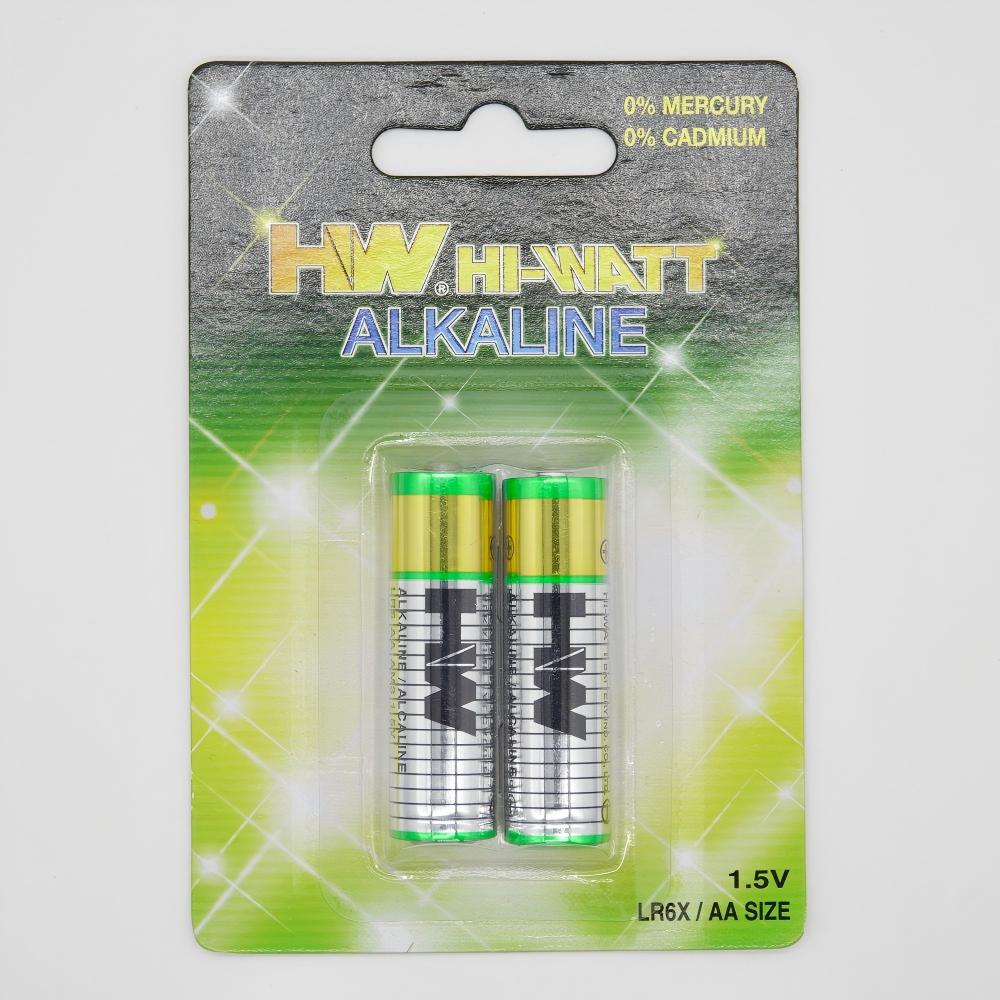
Alkaline batteries (like the Hi-Watt Alkaline series) are denser and have lower internal resistance. They are built to handle the "current spikes" of digital cameras and motors.
The comparison: In that same toy car where Carbon Zinc died in 10 minutes, a quality Alkaline battery can keep running for 2 hours or more. That is not just a small difference; that is a completely different user experience.
The Ultimate Battery Cheat Sheet: What Goes Where?
Stop guessing at the store shelf. Here is your definitive guide to matching the Hi-Watt battery to the device.
| Device Type | Recommended Battery |
|---|---|
| Wall Clock | Carbon Zinc (Heavy Duty) |
| TV / AC Remote | Carbon Zinc (Heavy Duty) |
| RC Toy Car | Alkaline |
| Wireless Mouse/Keyboard | Alkaline |
| Digital Camera | Alkaline (or Lithium) |
| Flashlight (LED) | Alkaline |
| Smoke Detector | Alkaline |
For the Pros: When to Switch to Lithium
Are you a photographer or a hardcore gamer? Sometimes, even Alkaline isn't enough.
For professional high-drain devices, consider upgrading to Lithium (like Hi-Watt’s Lithium series). Lithium batteries are lighter, handle extreme temperatures better, and last significantly longer in high-drain tech (like camera flashes) compared to standard alkaline for digital cameras. They are the "premium fuel" for your most expensive gadgets.
Conclusion: Stop Guessing, Start Powering Smart
The next time you are shopping at Hi-Watt, don't just look at the price tag—look at the device you need to power.
If you are powering a clock, save your money and grab the Heavy Duty Carbon Zinc. If you are buying best batteries for toys to keep your kids happy, invest in the Alkaline.
Choosing the right battery isn't just about chemistry; it's about performance, value, and ensuring your devices work exactly when you need them to.