The "Remote Control" Gambling Habit
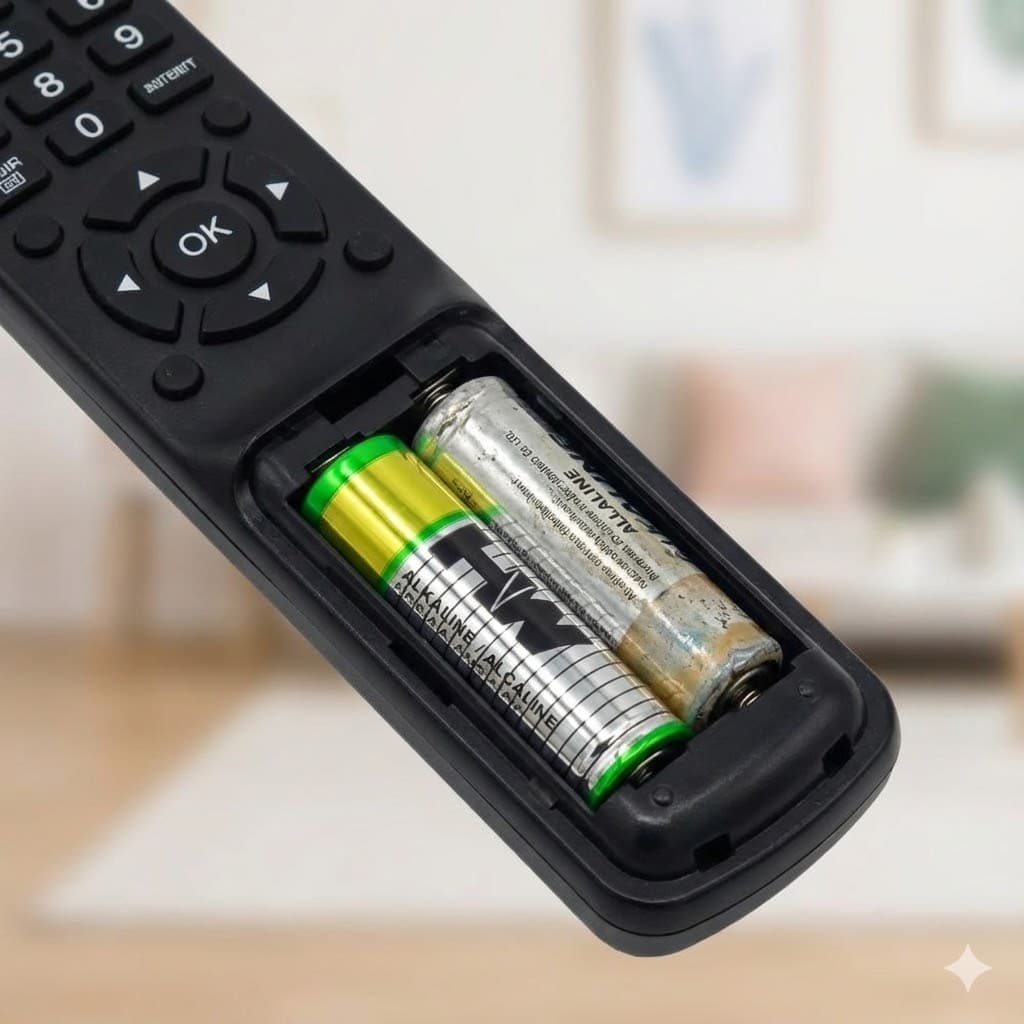
We have all been there. It is Friday night, you are settled in for a movie, and you press the power button on the remote. Nothing. You shake it, smack it against your palm, and maybe roll the batteries around. Still nothing.
You open the drawer and find one fresh battery. You think, "I'll just replace one of them. That should be enough, right?" It feels like a thrifty hack. You are saving money! You are stretching your resources!
Stop right there. While it might seem like a clever way to squeeze out a little extra life, mixing old and new batteries is essentially playing Russian Roulette with your electronics. It is one of the most common—and most damaging—mistakes consumers make. Today, as your trusted energy partners at Hi-Watt, we are going to explain exactly why this habit is dangerous and why your devices deserve better.
The Science of the "Weakest Link": Why Batteries Hate Teamwork
To understand why mixing is bad, you have to understand how most devices work. When you put two or more batteries into a device (like a flashlight or a toy), they are usually connected in a series circuit.
Think of a team of horses pulling a carriage. If you harness a strong, young stallion (the new battery) next to an exhausted, old pony (the dead battery), what happens? The stallion doesn't just pull the carriage; he ends up dragging the pony, too. The pony slows the whole team down, and eventually, the pony collapses.
In the world of physics, this is the "Barrel Effect" or "Short Board Theory." The capacity of your entire power supply is limited by the weakest battery in the chain. You aren't getting the power of the new battery; you are restricted to the limitations of the old one.
The Vampire Effect: How Old Batteries Drain New Ones

Here is where it gets techy (and a little scary). When you mix old and new batteries, the voltage difference creates a conflict. The fresh battery has a full 1.5 volts (or more), while the old one might be down to 1.1 volts.
Electricity flows like water—from high pressure to low pressure. The fresh battery will try to push energy through the device and into the dead battery. This is called reverse charging. Instead of powering your device, the new battery wastes its energy trying to "charge" the dead one.
The result? Your brand-new battery dies incredibly fast. You might think you saved 50 cents by using an old cell, but you actually wasted the dollar you spent on the new one because the old vampire battery sucked it dry in record time.
The "Toxic Cocktail": Mixing Different Types of Batteries
If mixing ages is bad, mixing chemistries is a disaster waiting to happen. We often see customers grabbing whatever is in the drawer—one Hi-Watt Carbon Zinc and one random Alkaline they found in a toy.
Alkaline vs. Carbon Zinc: A Recipe for Disaster
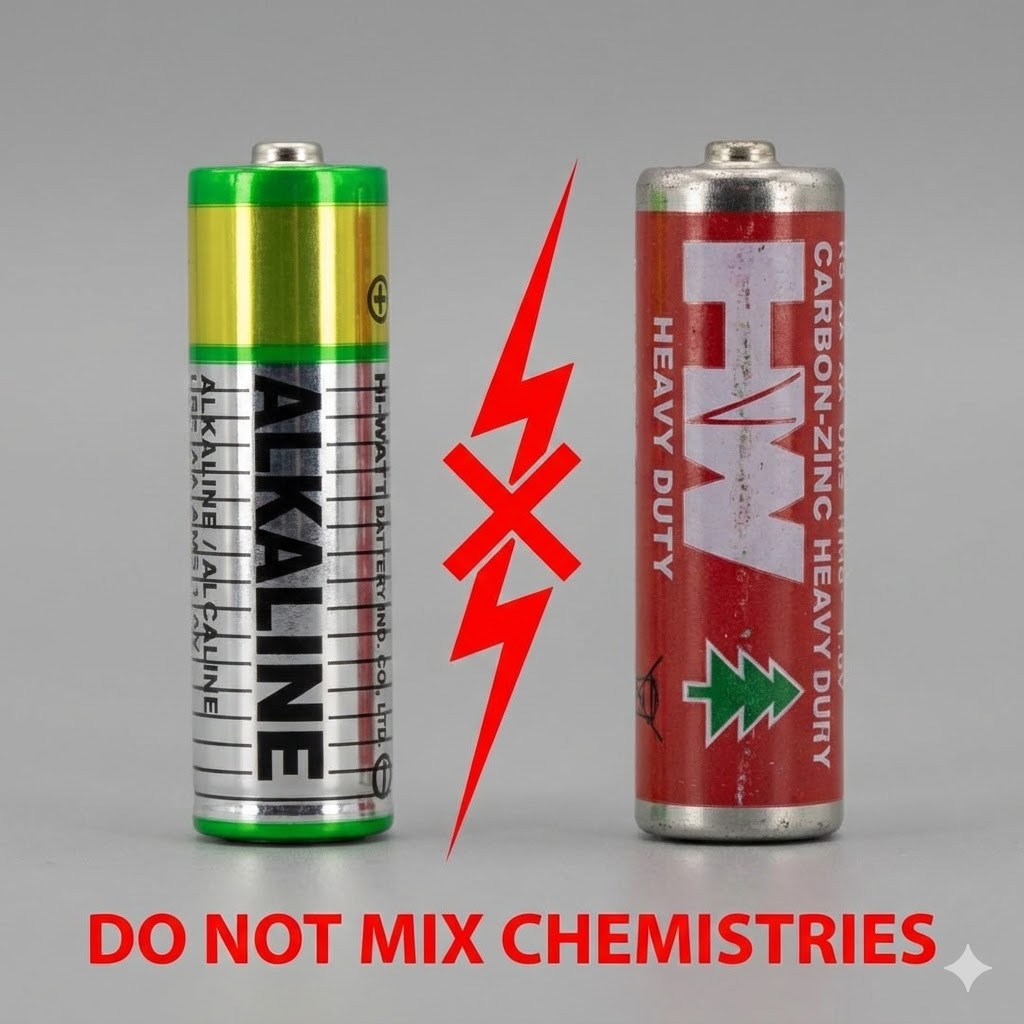
Mixing alkaline and carbon zinc batteries is a huge safety no-no. Why? Because they are built differently.
Alkaline batteries are designed for long-lasting, high-current output. They are the marathon runners.
Carbon Zinc (Heavy Duty) batteries are designed for low-drain, economical use. They are the casual walkers.
If you put them in the same device, the Alkaline battery will pump out energy much faster than the Carbon Zinc battery can handle. The Alkaline battery will literally "bully" the Carbon Zinc cell, forcing current through it at a rate that causes the chemical paste inside the Carbon Zinc battery to destabilize. This leads to rapid gas buildup, swelling, and eventually, a messy rupture.
Brand vs. Brand: Why Fidelity Matters
"Okay," you say, "I'll use two new batteries, but they are different brands."
This is less dangerous than mixing chemistries, but mixing battery brands is still not recommended. Different manufacturers use different formulas, casing thicknesses, and internal resistance standards. A Hi-Watt battery is engineered to specific performance curves. Another brand might have a slightly different curve.
When these mismatched "personalities" work together, it causes an imbalance. One battery will discharge faster than the other, leading you right back to the "old vs. new" problem we discussed earlier. Uniformity is the key to efficiency.
The Real-World Consequences (It’s Not Just About Power)
So, what is the worst that can happen? Your toy car runs slow? Unfortunately, the stakes are higher than that.
The Leakage Nightmare
When a fresh battery force-feeds energy into a dead one (or a weaker chemical type), it generates hydrogen gas inside the weak battery. Batteries are sealed metal cans. When gas builds up, pressure rises.
Eventually, the seal fails. The safety vent pops, and the electrolyte leaks out. This fluid is corrosive. It eats through the metal springs in your battery compartment and can destroy the circuit board of your expensive electronics. We have seen $300 camera flashes ruined because the owner tried to save money by mixing mismatched batteries.
Are you a Brand Owner or Electronics Manufacturer?
Don't let low-quality or mismatched batteries damage your brand's reputation. Ensure your devices are powered by Hi-Watt's leak-proof technology.
Learn About Our OEM Battery Solutions
The Heat Wave and Ruined Electronics
In high-drain devices, this imbalance creates resistance, and resistance creates heat. If you have ever taken batteries out of a device and found them surprisingly hot to the touch, you have likely experienced this. In extreme cases, this heat can melt the plastic casing of your device or even cause the batteries to rupture with a loud "pop."
The Hi-Watt Safety Protocol: 4 Rules to Live By
At Hi-Watt, we want your devices to last and your family to be safe. We manufacture our batteries to rigorous safety standards, but we need you to use them correctly. Here is our simple protocol:
1. The "All or Nothing" Rule: When a device dies, replace all the batteries at the same time. Never replace just one.
2. Marry the Match: Use the same brand, the same type (Alkaline with Alkaline), and the same age.
3. Check the Expiry: Even "new" batteries can be old if they have been sitting in a drawer for 10 years. Check the date code on your Hi-Watt pack.
4. Remove When Idle: If you aren't using the device for a few months, take the batteries out. This prevents "parasitic drain" from turning a good battery into a dead (and leaking) one.
Final Verdict: Stop the Mix-and-Match Madness
The next time you are tempted to mix that half-dead battery with a fresh one, ask yourself: Is saving a few cents worth the risk of ruining my device?
Batteries are designed to work in harmony. Mixing old and new, or different chemistries, destroys that harmony, leading to wasted money, ruined electronics, and sticky chemical leaks. Treat your gadgets right. Feed them a fresh, matching set of Hi-Watt batteries, and they will reward you with reliable, safe performance. Stop the mix, and start the power!
Looking for a Reliable Battery Supplier?
At Hi-Watt, safety isn't just a tip—it's our manufacturing standard. With 0% Mercury/Cadmium and advanced anti-leak sealing, we provide the safest power for global markets.